

Important Chemical Storage Lessons from Recent Tragedies
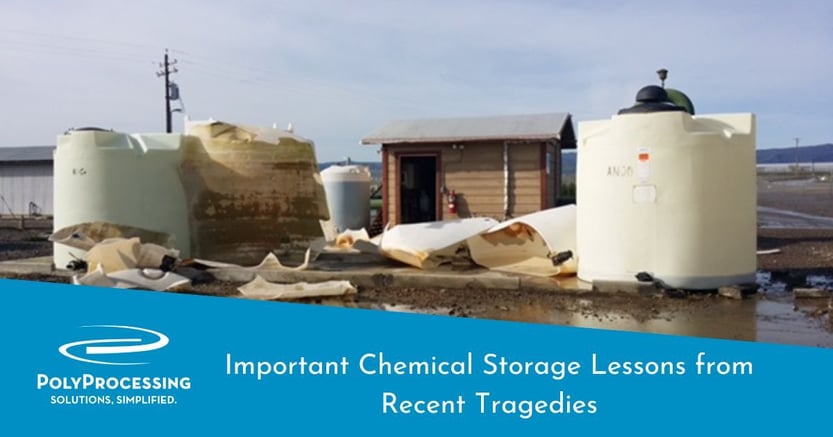
Recently, two major chemical leaks have made the national news. In both cases, the chemical tanks storing the materials experienced catastrophic failure, releasing deadly chemicals into the environment. In one case, 40,000 residents were forced to evacuate their homes. In another case, at least two deaths were confirmed.
Whether you’re operating a paper mill, treatment plant, data center, or other chemical facility, the most important priority is to follow all safety protocols and procedures. The real measure of operational excellence isn’t productivity or profitability, but how many people went home safely at the end of their shift.
While the recent news stories are tragic, they also serve as an eye-opener for facilities in every industry. You do not want your company to appear in national headlines — it can be devastating to your business as well as to the environment.
Now is a good time to remember some key guidelines for every chemical storage facility. Let’s take a look at a few lessons to learn from these events.
Don’t Treat Storage Tanks as an Afterthought
Too often, chemical storage tanks tend to be an afterthought, compared to all the other equipment involved in facility operations. Purchasers often think they just need to get a tank, and any tank will do.
In fact, proper tank design is crucial to successful safe chemical storage. Many companies come to us thinking they have a specific chemical storage tank already picked out. As they begin talking with our chemical tank experts, they realize that the tank they had in mind won’t meet their needs at all.
A chemical storage tank must be custom designed for the specific chemical storage application in which it will be used. At Poly Processing, the very first thing we need to know is what kind of chemical will be stored in the tank, and at what concentration. This information drives every other decision in the tank’s design.
There are also several other factors that determine how a tank must be designed. Your chemical tank specialist has the unique expertise to help you determine every aspect of the storage solution to ensure a safe and long useful tank life.

Inexpensive Doesn’t Mean Unimportant
A chemical storage solution is in many cases the least expensive aspect of a process system, but that doesn’t make your storage tank unimportant. In fact, it may prove to be your most valuable piece of equipment.
If your tank fails, the whole process system goes down. What ensues can include expensive environmental cleanup, equipment damage, operations shutdown, and personal injury or death.
Ironically, when you treat your least expensive component like it’s your least expensive component, it could suddenly become your costliest one.
When purchasing a chemical storage tank, take the time to be sure every detail is considered and designed properly. This includes:
- Tank material. Do you need a stainless steel tank, or will a fiberglass tank be sufficient? Often, high-density crosslinked polyethylene tanks are ideal for most chemicals.
- Tank design. Will your chemical storage application require a double-wall system to contain leaked chemicals? Do you need a tank that’s easy to clean out? Will full discharge be a priority?
- Environmental and weather conditions. If you’re in an earthquake zone, flood zone, or experience extreme temperatures, you’ll need to consider how to protect your stored chemical from the environment.
- Installation. How will you receive the chemical tank? An unplanned installation can result in damage to the storage tank, compromising its ability to perform as needed over time.

Your chemical storage tank may not be your most expensive piece of equipment, but failure to address these and other factors can result in catastrophe. Mishandling your tank can create hazardous chemical spills that endanger people, equipment, and the environment.
Don’t Set It and Forget It
It’s easy to forget about a chemical storage system once it has been installed at a facility. In some ways, it’s like a water heater — you buy it, install it, fill out the warranty, and put it out of your mind. But even a basic appliance needs routine maintenance and ongoing care if it’s going to last for years. You don’t want to discover suddenly one Monday morning that you have no hot water for your shower.
Likewise, chemical storage tanks require regular inspection and maintenance. While they may seem to be just large plastic tubs, Poly Processing’s chemical storage tanks are actually sophisticated systems that must be cared for properly.
Over time, chemical storage tanks become susceptible to cracks and leaks, and it is of the utmost importance to find any potential problems before they cause costly mishaps. This is why Poly Processing recommends an annual tank system inspection.
A comprehensive tank inspection examines your investment for cracks and crazing, gasket and fitting issues, and other critical points on the tank’s surface that may become compromised.

Poly Processing offers helpful inspection checklists and installation guides designed to support long-term performance and extend the life of your system well beyond our warranty period.
Investing in Chemical Storage for Greater Safety
Chemical storage tanks are a critical component of your process system. They need to be given proper attention to ensure that your operations, equipment, environment, and people are safe for the long haul.
Poly Processing’s goal as leaders in chemical storage is to make sure that employee safety and environmental care come first. We design and manufacture the industry’s most innovative chemical storage solutions so that everyone goes home safely.
While Poly Processing tanks weren’t involved in the recent incidents, every chemical spill is our concern — we don’t want to see any incidents. We share our chemical storage guides and materials to help everyone in the industry to operate safer chemical storage operations.

Posts By Topic

Tech Talk Podcast Episodes
Subscribe By Email
Recent Posts
Tank Configurator
Find the recommended tank and system components for your chemical storage challenge.
Configure a Tank Package