

Your Double-Wall Tank Might Be Incomplete Without Double-Wall Piping
When it comes to storing liquids safely — whether chemicals, wastewater, or materials used in the food and beverage industry — double-wall piping is an essential layer of protection. The majority of double-wall piping applications are used to address the safe handling of wastewater chemicals, contaminated groundwater, and chemical process safety.
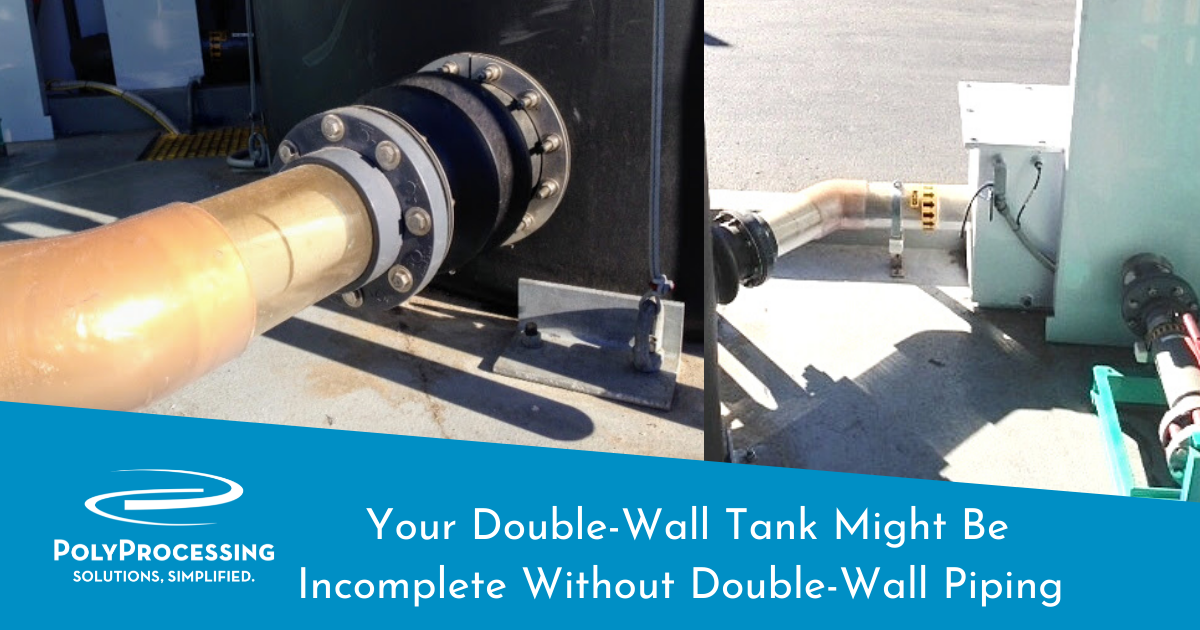
Double-wall piping systems are designed to guard against leaks in a variety of chemical storage settings. When paired with a SAFE-Tank® system, they create a storage solution that offers even greater security and peace of mind.
How Double-Wall Piping Completes a Double-Wall Tank System
A double-wall tank only provides secondary containment where the tank sits. The connection points leaving the tank still matter. If the product can travel outside containment through a single-wall pipe, the overall system is not fully contained.
Many facilities design for “full containment” as a system concept. That means the tank, fittings, piping, and termination points all keep the chemical within a controlled boundary, even during a leak.

Where Regulations Commonly Drive Secondary Containment for Piping
Requirements vary by industry, chemical, and site risk. Still, two regulatory areas commonly influence design decisions.
For oil storage subject to SPCC, EPA requirements include written inspection procedures, record keeping, and regular inspection of aboveground piping components such as joints, expansion joints, supports, and valves. Buried piping must be integrity- and leak-tested at key lifecycle events, such as installation or modification.
For regulated underground storage tank systems, EPA rules require secondary containment for new or replaced tanks and piping, and interstitial monitoring for release detection in those secondarily contained systems.
What Is Double-Wall Piping?
Double-wall piping is a secondary containment piping system — in simple terms, a pipe within a pipe. The inner pipe is enclosed within an outer casing, and an interstitial space separates the two. The inner pipe serves as the primary, or carrier, pipe, while the outer pipe acts as the secondary, or containment, pipe.
What Usually Fails First in Double-Wall Piping Systems
Most leaks start at transition and connection points, not in straight pipe runs. Pay close attention to flange joints, valve bodies, expansion joints, and any location where vibration or thermal movement loads the line. These are also the areas EPA calls out for condition assessment in piping inspections under SPCC.
Support and alignment matter. Poor supports can create stress at fittings and joints. If pumps or skids transmit vibration into rigid piping, that vibration often shows up as repeated stress at the same connection points.
Design Note for Double-Wall Tank Installations
Treat the tank outlet, the pump suction, and any skid connection as “high-consequence” areas. These are the most likely places to see movement, torque, or vibration. Plan flexibility into the connection strategy and keep containment continuous through those points.
The Benefits of Double-Wall Piping
The added layer of protection that double-wall piping provides makes it a go-to solution across a wide range of applications. It’s especially critical in facilities that handle certain classes of toxic or corrosive chemicals, such as those used in semiconductor fabrication. It’s also commonly used when a wastewater pipe runs through a drinking water catchment area.
The U.S. Environmental Protection Agency (EPA) requires double-wall piping at certain wastewater treatment plants, as well as at sanitary or hazardous-waste landfills and remediation sites. These regulations affect the transportation of hazardous materials from tank farms, select food-processing facilities, and drainage or runoff from process plants.
A leak detection system should be integrated into the containment pipe or pump containment system to detect leaks at any point along the carrier pipe. Double-wall pipes should always be hydrostatically tested after installation and before being placed into service at a facility.
Leak Detection Basics for the Interstitial Space
Interstitial monitoring works best when the containment space stays clean, accessible, and predictable. Use leak detection that matches the chemical's risk and the consequences of downtime. Then place sensors where leaks will first appear.
In many designs, you get faster detection by monitoring low points, containment sumps, and any pump containment area. That approach aligns with how many facilities already think about “detect early” at the highest-risk joints and transitions.
Commissioning Checklist Before You Put Double-Wall Piping Into Service
Hydrostatic testing is a start, but commissioning should be broader than one test. Document what was tested, how it was tested, and who signed off.
For SPCC-regulated oil facilities, EPA also expects written inspection and test procedures and records retained with the SPCC Plan for a defined period. That documentation mindset translates well to chemical containment projects, even when SPCC does not apply.
The SAFE-Tank
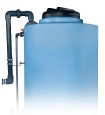
Poly Processing recognizes the critical importance of full containment and personnel safety — which is why we developed the SAFE-Tank System, a fully contained, double-wall tank system built to deliver reliable, long-term protection.

The SAFE-Tank double-wall tank system offers several key advantages:
- Provides at least 110% secondary containment.
- Equalizes liquid levels and allows the chemical to remain in use until repairs can be made at a convenient time.
- Ideal for chemicals such as sulfuric acid and caustic soda, which can produce dangerous exothermic reactions when exposed to water.
- Eliminates the cost and ongoing maintenance associated with secondary concrete containment systems.
- Reduces the overall system footprint by delivering secondary containment in a more compact form.
- Prevents chemical contamination in the event of a spill.
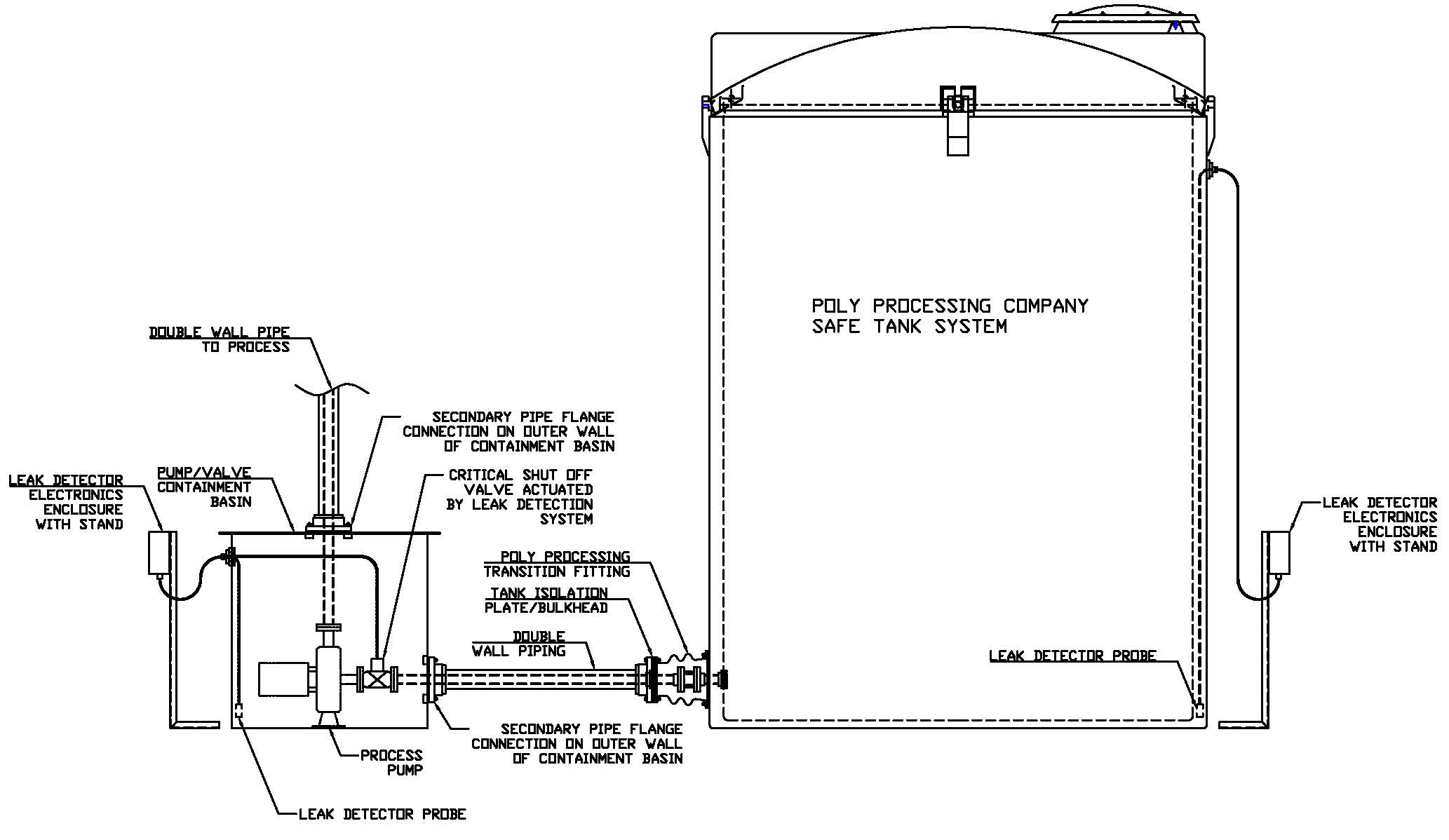
- Enables complete double-wall piping from the tank to a pump skid or pump box using the PPC Bellows Transition Fitting.
View our SAFE-Tank installation page
Why “True” Double-Wall Transitions Matter on a Double-Wall Tank
A common weak spot is the point where the system changes from a contained tank to external piping. If containment breaks at that transition, the system no longer functions as full containment.
Plan transitions so the secondary containment path stays continuous from the tank through to the termination point. That includes connections at pump skids, pump boxes, and any areas where operators expect to service valves, instruments, or strainers.
Practical Maintenance Habits That Protect Full Containment
Test leak detection alarms on a defined schedule. Document results and corrective actions so operators can spot patterns early.
During routine walk-downs, inspect joints, supports, valve glands, and any expansion joints. These are common inspection focus areas for piping condition in SPCC-covered facilities, and they are good practices for chemical lines as well.
Get Even More Out of Your SAFE-Tank
Adding the Bellows Transition Fitting takes your SAFE-Tank system's performance to the next level by enabling safe drainage of the primary tank through single or double-wall piping.

The SAFE-Tank can be double-wall piped from the tank to any desired termination point using a true double-wall transition fitting. This critical fitting drains the primary tank through the containment tank while providing secondary containment around the fitting itself. A six-inch flange can be mounted to the exterior of the transition fitting, allowing double-wall piping to run while maintaining full containment throughout.
Poly Processing also incorporates an isolation plate with a fitting to prevent any leak from the interstitial tank space from reaching the ground or causing an overflow.
In most installations, leak detectors are placed in both the containment tank and the pump containment area to monitor the entire pipe system for issues. These sensors can trigger shutoff valves upon detecting a leak, providing operators and facility owners with confidence in the safety and integrity of their tank system or tank farm.

Poly Processing Company also manufactures pump skid containment tanks that fully contain the pump system and ensure complete chemical containment throughout the facility.
If you are planning a double-wall tank upgrade or want to verify full containment from tank to termination point, talk with Poly Processing about the safest transition and containment approach for your layout.
Learn more about the benefits of the SAFE-Tank and double-wall piping in our latest guide.

Posts By Topic

Tech Talk Podcast Episodes
Subscribe By Email
Recent Posts
- Flexible Connectors and Isolation Valves: Why Correct Installation Protects Your Chemical Storage Tank
- Why ASTM D-1998 Still Matters: The Standard That Separates Serious Tank Manufacturers from the Rest
- Brine Storage Tank Solutions: Material and Manufacturing
- Understanding Pressure Limits in Polyethylene Chemical Storage Tanks
- Easy Level Monitoring with the Reverse Float Level Gauge
Tank Configurator
Find the recommended tank and system components for your chemical storage challenge.
Configure a Tank Package