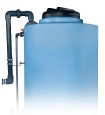
One of the most important design considerations of any chemical storage tank system is the use of flexible connectors and isolation valves. When paired correctly, these accessories will not only help ensure your storage tank's longevity, they can also protect the tank from hinge points that cause dangerous leaks.
Topics:
Fittings and Accessories
When engineers and plant operators design a chemical storage tank system, pressure management is one of the most critical — and most frequently underestimated — factors affecting long-term performance and safety. Whether you're storing sodium hypochlorite, sulfuric acid, hydrochloric acid, or another chemical, understanding the pressure dynamics inside your polyethylene storage tank is essential for protecting your people, your equipment, and the surrounding environment.
Topics:
Fittings and Accessories
When purchasing a chemical storage tank, it can feel overwhelming to navigate the landscape of industry standards and regulatory requirements. From material testing protocols to federal safety mandates, the compliance considerations are numerous — and the stakes can be high. A misstep can mean choosing a tank that fails prematurely, exposes workers to hazardous chemicals, or runs afoul of federal and state regulations.
Topics:
Fittings and Accessories,
Tank Design and Materials
Chemical separation inside a storage tank isn’t just an operational inconvenience; it’s a genuine threat to product quality, process efficiency, and system longevity. When industrial chemicals stratify, settle, or lose homogeneity, the downstream effects range from inconsistent dosing and reduced treatment effectiveness to accelerated tank degradation and costly unplanned downtime.
Topics:
Fittings and Accessories
When it comes to storing liquids safely — whether chemicals, wastewater, or materials used in the food and beverage industry — double-wall piping is an essential layer of protection. The majority of double-wall piping applications are used to address the safe handling of wastewater chemicals, contaminated groundwater, and chemical process safety. Double-wall piping systems are designed to guard against leaks in a variety of chemical storage settings. When paired with a SAFE-Tank® system, they create a storage solution that offers even greater security and peace of mind.
Topics:
Fittings and Accessories,
Tank Design and Materials
Before you put a Poly Processing chemical storage tank into service, it’s important to conduct a hydro test so that you can commission the tank with confidence. A hydro test verifies the structural integrity of the tank by filling it with water and checking for leaks. The test is one of the most reliable steps to perform before you begin using a Poly Processing polyethylene storage tank.
Topics:
Fittings and Accessories
When it comes to safely storing hazardous chemicals in full compliance with federal environmental regulations, not all double-wall tanks are created equal. Poly Processing’s SAFE-Tank® is the most recognized name in high-density cross-linked polyethylene double-wall chemical storage.
Topics:
Fittings and Accessories
It’s a situation Poly Processing encounters more often than you might expect. A customer orders a tank, it ships on time and arrives at the facility — and then the real problem begins. The building was designed without any consideration for the size of a polyethylene chemical storage tank — there’s no plan for bringing the tank into the building, positioning it, or eventually removing it at the time of replacement.
Topics:
Fittings and Accessories
Data centers are the backbone of our digital world. These secure, specialized facilities house, power, and cool massive amounts of computing equipment, servers, and data storage systems. They must operate without interruption, 24 hours a day, 7 days a week. Data centers have become one of the most critical pieces of infrastructure that today’s society depends on.
Topics:
Fittings and Accessories
When it comes to chemical storage tanks, the outlet fitting is one of the most critical points in the entire system. It's where stored chemicals meet the outside world, where pressure concentrates, and where tank failure tends to happen first.
Topics:
Fittings and Accessories