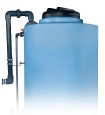
Hydrofluorosilicic acid is a challenging chemical because it has properties that pose a danger and specific storage concerns. With its common use in water treatment, it is important to be aware of the risks of improperly storing this aggressive chemical. Let’s take a closer look at the nature of hydrofluorosilicic acid, its applications, the specific storage concerns and solutions, and safety considerations when working with this complicated chemical.
Topics:
Chemicals
Poly Processing Company invites you to visit us, booth #4243 at the WEFTEC 2024 conference on October 7-9, 2024.
Topics:
News and Customer Stories
If you’re storing potassium hydroxide, you have a chemical that can’t be taken lightly. Storing and handling potassium hydroxide requires a chemical tank system that will live up to the rigors of a hazardous substance without the possibility of a catastrophic failure in the case of a leak.
While many of the chemicals stored in polyethylene tanks don’t require side manways, these accessories are available as an add-on option to Poly Processing chemical storage tanks. A side manway often provides several safety and efficiency benefits that may be worth considering for your facility.
Topics:
Chemical Storage
Hydrochloric acid (HCl), also known as muriatic acid, is toxic and highly corrosive. The chemical is used in many different applications, including chloride production, refining ore, and producing metals like tantalum and tin.
Topics:
Chemical Storage
It’s easy to get confused between NSF certification, FDA approval, and FDA requirements. Which terms do you need to be familiar with, and what should you expect from your chemical storage tank? These are good questions, and it’s important to understand the differences between NSF and FDA as you prepare to purchase a chemical storage system.
Topics:
Certifications and Standards
Acetic acid is a versatile, common chemical that’s used for a variety of purposes. The colorless liquid usually has a sour odor and can cause physical harm if it isn’t handled correctly. It is critical to ensure that you design a proper storage solution, because improper acetic acid storage can risk the health of the people who work near it.
Topics:
Chemicals
Without the right equipment, it’s difficult to judge how much volume of chemical you have in your chemical storage tanks. If you overestimate your volume, you could run out of inventory before the next delivery. The last thing you want to deal with is downtime that could have been avoided.
Topics:
Value Added
Leakage from a chemical storage tank or a leaking tank fitting can have far-reaching consequences, from compromising product quality to posing significant safety hazards. That’s why it’s important to integrate robust liquid leak detection systems wherever you store liquid chemicals and hazardous solutions.
Topics:
Technology Tips
When storing a chemical, it is critical to be confident that your entire tank system is compatible with the chemical and is up to the task of providing safe storage. To help customers understand the compatibility of specific chemicals with our polyethylene tanks and accessories, we created our chemical resistance guide.
Topics:
Technology Tips